Ancient Gadara and the view
Umm Qais was the ancient city of Gadara, one of the ten cities of the Roman Decapolis and a centre of Hellenistic culture, philosophy and literature. What distinguishes it from other Roman sites in Jordan is both its material — dark basalt, giving the ruins a dramatic colour — and its position: a ridge overlooking the confluence of the Jordan Valley, the Yarmouk River gorge, and, on clear days, the Sea of Galilee, the Golan Heights and the hills of Lebanon.
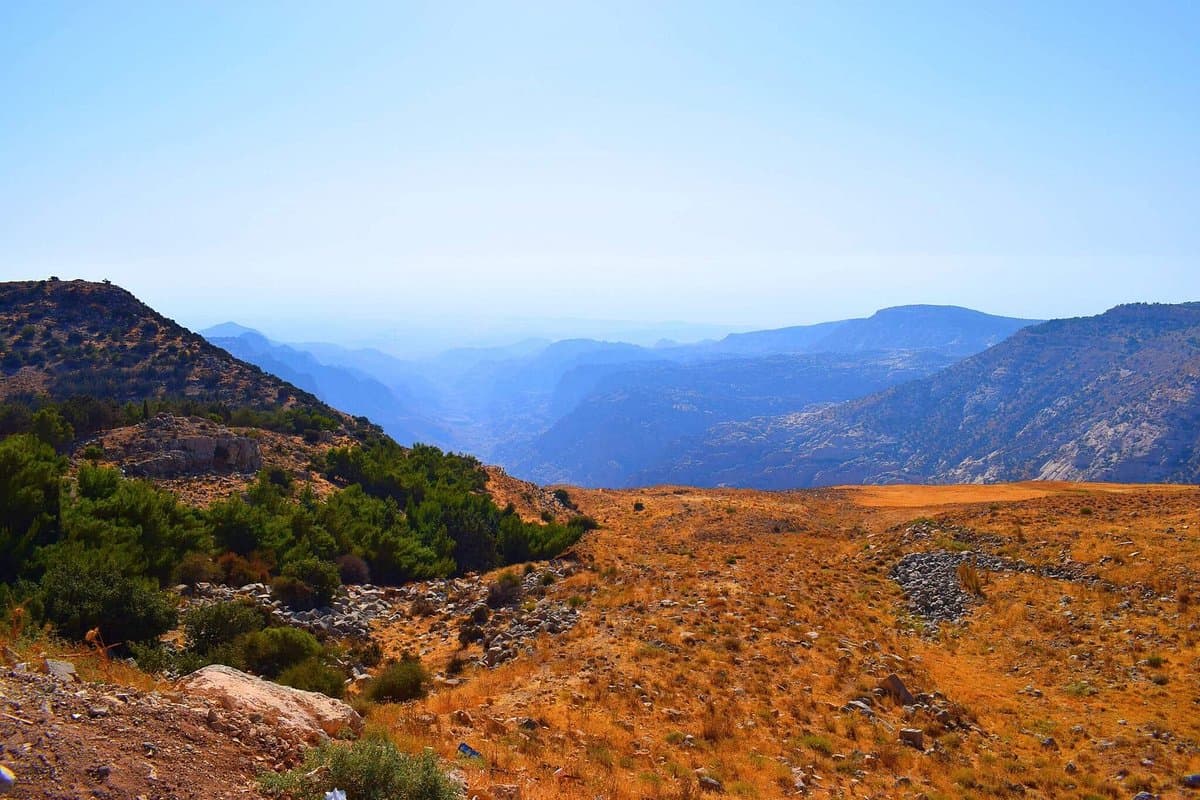
The view from the Ottoman-era terrace restaurant at the site is extraordinary: simultaneously into Jordan, Syria and Israel within a single turn of the head. Three countries share this corner of the Middle East, and standing on Gadara's ridge makes that geography visceral and immediate in a way a map cannot.
The ruins of Gadara
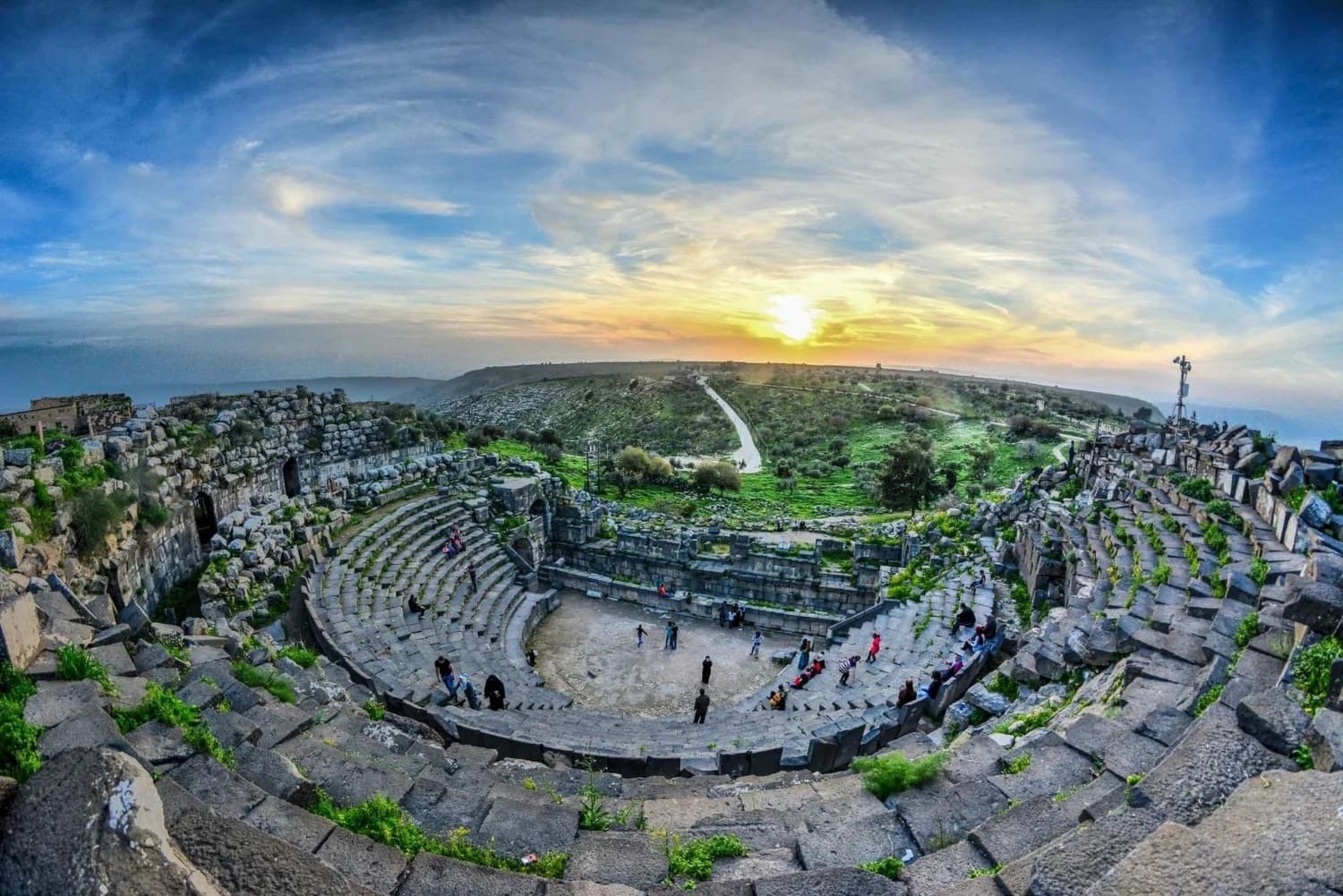
The western theatre, dating to the 2nd century AD, is built of the same dark basalt as the rest of the city — its cavea, stage wall and some decorative elements survive. The colonnaded street runs east-west through the city with original basalt paving and fallen column drums.
The mausoleum of Chariton, a local philosopher of the 2nd century, is a well-preserved tomb at the northern edge of the site. The Baths of Gadara, fed by a thermal spring, were among the most celebrated healing waters of the ancient world — the site's therapeutic tradition is still honoured at the nearby Hammat Gader spa on the Yarmouk River.
Getting to Umm Qais
Umm Qais sits in the far northwest of Jordan, 110 km from Amman — about 1.5 hours by car. The town of Irbid, Jordan's second city, is 28 km south and makes a comfortable overnight base for north Jordan exploration.
The drive from Amman via the Jordan Valley road is scenic and less common than the direct highway — it passes King Abdullah Canal, verdant agricultural land and the rim of the Jordan Valley. Al Maqsad offers day trips to Umm Qais from Amman and north Jordan circuits combining Umm Qais, Ajloun and Jerash.
Combining with north Jordan
The natural combination is Umm Qais in the morning (for the dawn view over the Sea of Galilee), then Jerash in the afternoon (1.5 hours south), then Amman in the evening. This makes a very full but rewarding day trip.
Alternatively, stay overnight in Irbid and explore all three north Jordan sites over two days with less rushing. The Yarmouk Nature Reserve, east of Umm Qais along the Yarmouk gorge, adds a hiking dimension. Hammat Gader, across the border in Israel, is accessible if you hold appropriate visas.