Why a desert night changes everything
Wadi Rum at night is Wadi Rum at its finest. With zero light pollution for a hundred kilometres in every direction, the Milky Way appears so densely packed it looks solid — an effect you genuinely cannot describe to someone who has only ever seen city skies. Bedouin guides can identify constellations and planets with naked-eye precision.
The silence is equally remarkable. Desert nights are not quiet in the way a hotel room is quiet — they are genuinely, profoundly still. Occasional wind, distant owls, and the sounds of the camp fire are the only interruptions. Most travellers say a night in the desert reorganises their sense of proportion in a way no photograph can prepare you for.
Camp types: from authentic to luxury
Traditional Bedouin camps consist of black goat-hair tents or Jordanian canvas tents, a communal fire, a shared bathroom block, and a dinner of zarb and mezze. They are basic, atmospheric and often the most memorable. Captain's Camp and Harir Rum are well-regarded options in this category.
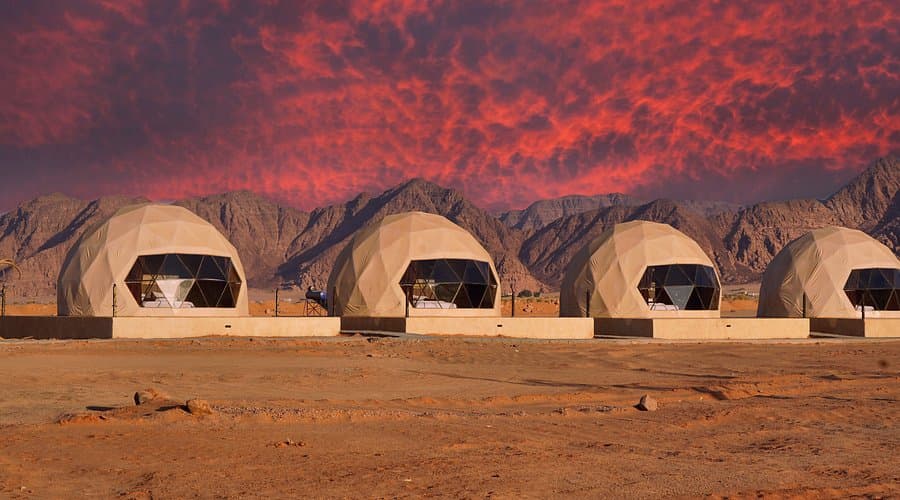
Luxury camps have elevated this model dramatically. Transparent bubble domes, wooden-deck suites with en-suite bathrooms, private stargazing terraces and gourmet meals are now available. Wadi Rum Night Luxury Camp, Memories Aicha, and Hasan Zawaideh offer these experiences. The Jabal Rum Camp is our current favourite for the balance of luxury and authenticity.
A typical desert night
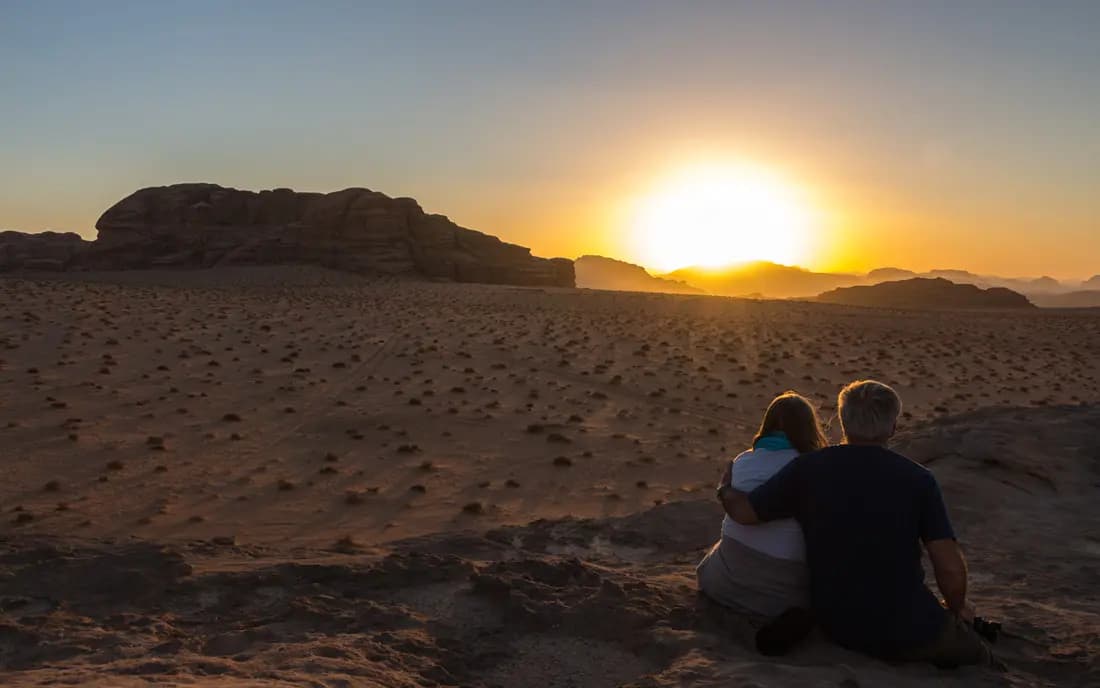
Your guide arrives at the camp by late afternoon for sundowners over the dunes — golden hour in Wadi Rum is extraordinary, the rose-coloured sandstone turning deep amber as the sun lowers. Zarb is lifted from the sand around sunset: lamb and chicken slow-cooked underground on hot coals, served with rice, bread and yoghurt sauces.
After dinner, the fire keeps going and Bedouin tea appears — strong, sweet and cardamom-spiced. Guides share stories of the desert, point out planets, and often play traditional Rababa music. By 10pm most guests find the silence pulls them to their tent. At 5am the sunrise is worth waking for.
What to bring and what to expect
Desert nights are surprisingly cold even in summer — temperatures drop 15–20 degrees from the afternoon peak once the sun sets. Bring a warm fleece or light jacket regardless of the season. Camps provide blankets and pillows, but a sleeping bag liner is welcome in winter.
Signal is limited or absent in most camps. Consider this a feature rather than a problem. Charging facilities are available at most camps but keep expectations modest. Electrical outlets, when they exist, are limited. The experience is deliberately, wonderfully off-grid.