
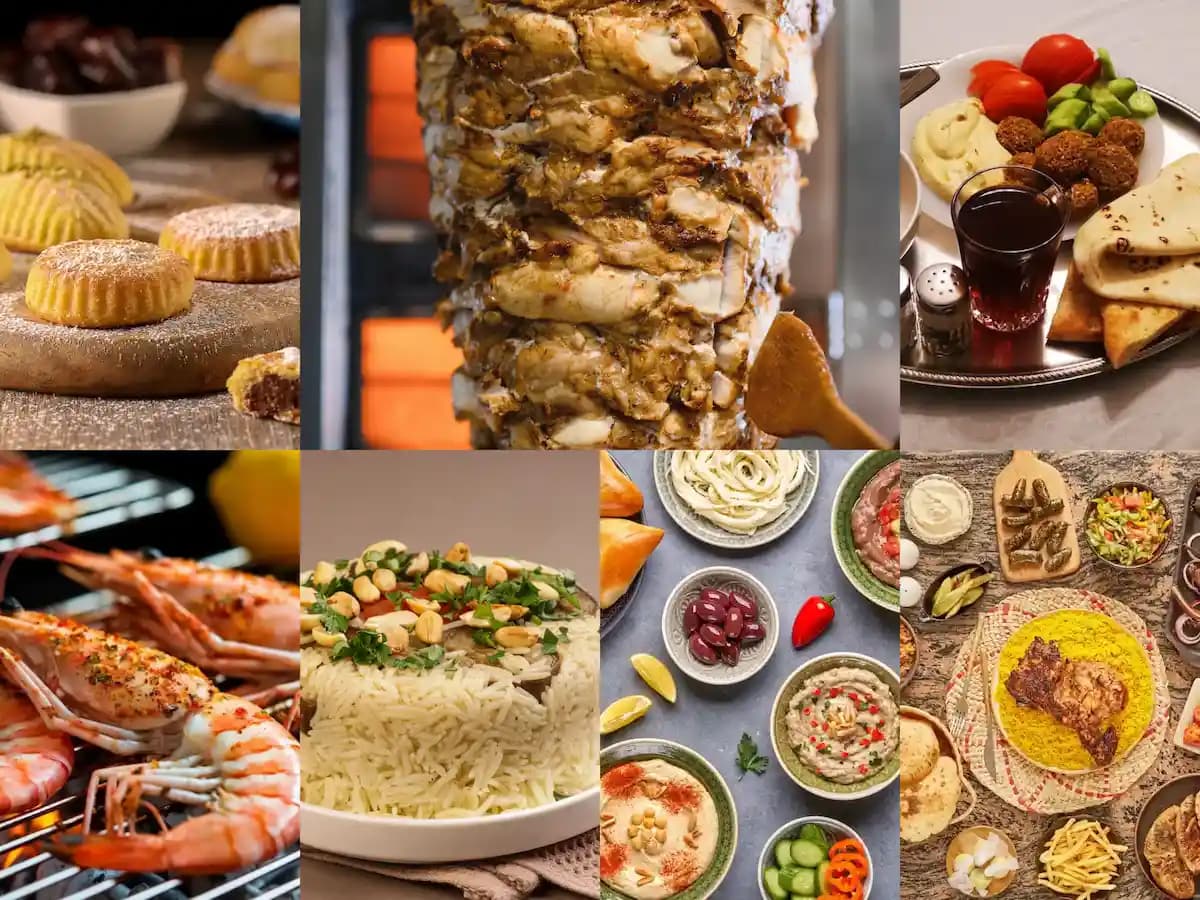
The holy trinity: bread, hummus and falafel
Every meal in Jordan begins with bread. Khubz, the round flatbread baked fresh in every neighbourhood, arrives at the table warm and is used as a utensil, a scoop and a vessel throughout the meal. Without bread, a Jordanian meal is incomplete.
Hummus in Jordan is not the supermarket variety — it is freshly made from dried chickpeas, tahini, lemon and olive oil, served warm with a pool of oil in the centre and eaten immediately. Falafel, fried chickpea balls seasoned with cumin and coriander, are eaten for breakfast as often as for lunch. Hashem Restaurant in downtown Amman does both better than anywhere else.
The iconic mains
Mansaf is the national dish: a towering serving of rice and lamb cooked in jameed (a fermented dried yoghurt broth) piled onto bread, scattered with almonds and pine nuts, and eaten communally with the right hand. It is served at weddings, Eid celebrations and any occasion of significance. To be invited to a mansaf is an honour.
Zarb is the Bedouin answer to the underground oven — a metal rack of seasoned lamb, chicken and vegetables lowered into a sandpit over hot coals and slow-cooked for hours. It is the signature dish of the desert camps in Wadi Rum and, eaten under the stars, it is unforgettable. Maqluba — "upside-down" — is a layered pot of rice, vegetables and meat flipped at the table in a dramatic reveal.
Street food and sweets
Arayes are flatbreads stuffed with minced meat and spices, griddled until crisp — a perfect street snack, especially in the Old City of Jerusalem-adjacent Palestinian-Jordanian neighbourhoods. Ful medames, stewed fava beans dressed with olive oil and lemon, is the traditional workman's breakfast.
Knafeh is the queen of Levantine sweets: a layer of stretchy white cheese beneath shredded pastry soaked in orange-blossom syrup, served scorching hot. Nablus style (from the Palestinian city famous for it) is the definitive version. Amman has several excellent knafeh counters open from early morning.
What to drink
Tea in Jordan is served sweet, black and strong — often flavoured with sage (maramiya) or mint. It is offered everywhere: in shops, in Bedouin tents, before and after meals. To refuse tea is to refuse hospitality, so accept graciously even if you only take a sip.
Fresh juice bars line every city street: pomegranate, carrot, avocado and seasonal fruits are blended to order. Arabic coffee (qahwa) is another ritual — bitter, cardamom-spiced and served in small cups, traditionally refilled until you wave the cup to signal you are done.